
Can ARM challenge X86 in the field of PC chips?
More than 20 years ago, Microsoft's Windows operating system and Intel's X86 chips swept the entire computer market until they met Apple. The sudden emergence of Apple has created cracks in the once unbreakable Wintel camp. "Windows + X86" is no longer the only topic, you can also choose "macOS + X86". In 2020, the release of the M1 chip has also drawn the ARM architecture into this battle, and the X86 has ushered in a new competitor.
Today, in the field of PC chips, can ARM challenge X86?
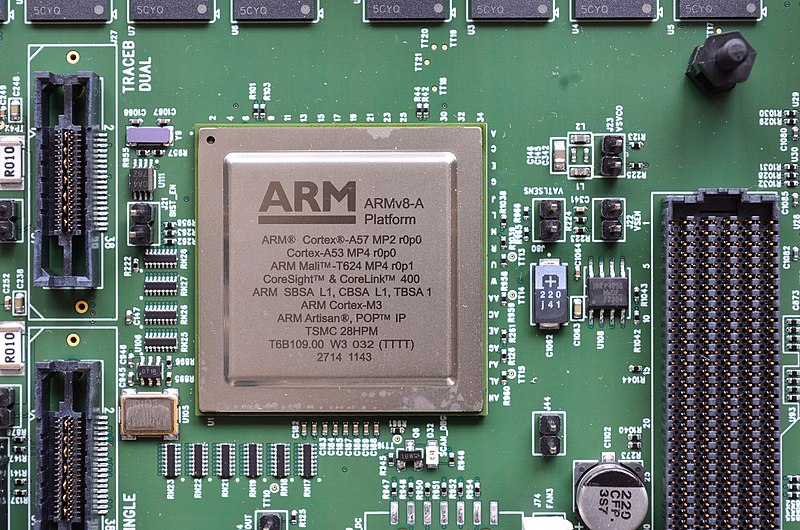
The Mali family of graphics processing units (GPUs) and multimedia processors are the core of semiconductor intellectual property produced by Arm Holdings and used to license various ASIC designs from Arm partners. Mali GPUs are considered suitable for mobile GPUs.
Like other embedded IP cores for 3D rendering acceleration, Mali GPUs do not include a display controller to drive the display, unlike common desktop graphics cards. Instead, the Mali ARM core is a pure 3D engine that renders graphics into memory and passes the rendered image to another core to handle the display.
And the X86 chip Hackintosh (a combination of "Hack" and "Macintosh") is a computer running Apple's Macintosh operating system macOS (formerly "Mac OS X" or "OS X") on computer hardware not authorized by Apple. "Hackintoshing" began as a result of Apple's 2005 switch from PowerPC to Intel processors. Since 2005, Mac computers have used the same x86-64 computer architecture as many other desktops, laptops and servers, which means that in principle the code that makes up the macOS system and software can run on alternative platforms with minimal compatibility issues . Benefits cited in "Hackintoshing" may include cost (old, cheaper, or commodity hardware), ease of repair and piecemeal upgrades, and the freedom to use custom-selected products with components not available (or not included) in branded Apple products. macOS also runs on several non-Apple virtualization platforms, although such systems are not usually described as Hackintoshes. Hackintosh laptops are sometimes referred to as "Hackbooks".
Apple's macOS software license permits use of the software only on "Apple-branded" computers. However, since modern Macintosh computers use Intel-based hardware, the software runs with few limitations on other types of Intel-based PCs. It's worth noting that companies such as Psystar try to release products that use macOS on non-Apple machines, even though many Hackintosh systems are completely designed by macOS enthusiasts in various hacking forums and communities.
X86 vs ARM
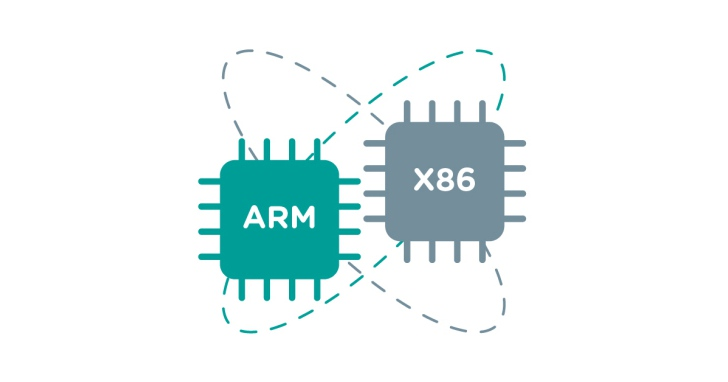
Everyone should be familiar with X86. It can be said to be the most successful CPU architecture in history, including Intel 8086, 80186, 80286, 80386 and 80486 series ending in 86, based on CISC architecture (Complex Instruction Set Computer, Complex Instruction Set Computer), Focus on accomplishing the required computational tasks with a minimum of machine language instructions.
The power of the X86 architecture is not in itself, but in the various programs built around it based on the X86 instruction architecture. However, with the development of the computer industry, in exchange for higher performance, the number of instruction sets integrated on the X86 is increasing, and the load on the hardware is also increasing, which virtually increases power consumption and design difficulty. .
Compared with X86, ARM greatly simplifies the architecture and retains only the required instructions, which can simplify the entire processor, with small size and high performance.
ecological problem
According to Statcounter Global Stats, a global network statistics website, as of May 2022, the global usage of various operating systems in the PC industry is as follows:
Windows 75.54%
OS X (Mac OS) 14.98%
Linux 2.45%
Chrome OS 2.22%
FreeBSD 0.01%
Obviously, there are two mainstream operating systems in the current PC industry, namely macOS and Windows. Since macOS is the operating system used by Apple itself, it generally does not authorize other manufacturers. Therefore, if Qualcomm wants to engage in the PC industry, it can only rely on the ecology of Windows.
However, the Windows ecosystem is not a whole. It can be roughly divided into two types according to the supported processors:
Generic OS that supports x86 processors (eg Windows 7, Windows 8.1)
A "relatively special operating system" that supports Arm processors (e.g. Windows 8.1 RT)
To sum up the difference between the two in one sentence: x86 is biological! But it also faces challenges from various chips such as ARM, Qualcomm, and Microsoft.
in conclusion
ARM and X86 cannot be compared as both processor architectures have their pros and cons, and ARM's superior power consumption and cooling capabilities allow it to fully exploit its strengths in a fixed situation. Meanwhile, Intel's X86 CISC architecture has traditionally allowed more complex instructions to be executed per clock, resulting in faster, more powerful computer performance, and easier performance scaling.
But it is undeniable that X86 is no longer the only choice. Under the influence of major manufacturers such as Apple, Qualcomm, and Microsoft, ARM will become a field of PC chips that cannot be ignored.